



Discovering a breast lump can be concerning, but it is important to remember that not every lump is cancerous. Conditions such as cysts, fibroadenomas, and hormonal changes can also cause breast lumps. However, some breast changes may indicate a more serious condition and should never be ignored.
If you notice any unusual changes in your breast or underarm area, seeking timely medical evaluation from Dr Joydeep Ghosh, an experienced breast cancer doctor in Kolkata, can help ensure accurate diagnosis and appropriate treatment.
While many breast lumps are benign, some may be accompanied by changes that warrant further investigation.
Here are 10 signs that may indicate a breast lump requires evaluation for breast cancer.
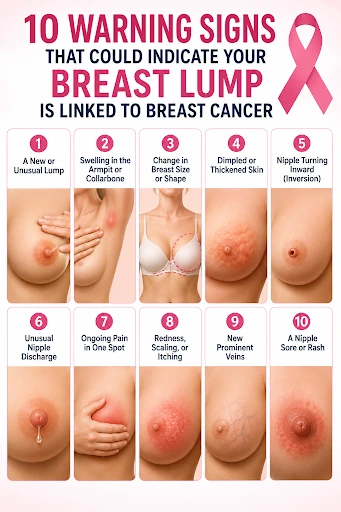
1. A New or Unusual Lump
A distinct lump or thickened area in the breast or underarm that feels different from the surrounding tissue may be an early sign of breast cancer. While many breast lumps are benign, any new or persistent lump should be evaluated by a doctor.
Look For
- Hard or firm lump
- Thickened area of breast tissue
- A lump that feels different from the surrounding tissue
- A lump that persists over time
2. Swelling in the Armpit or Collarbone
Swollen lymph nodes under the arm or near the collarbone can occur when cancer cells spread beyond the breast tissue. In some cases, this swelling may appear before a breast lump becomes noticeable.
Watch Out For
- Swelling under the arm
- Enlarged lymph nodes near the collarbone
- Persistent fullness in the armpit area
3. Change in Breast Size or Shape
A sudden, unexplained variation in the size, contour, or position of one breast compared to the other may be associated with breast cancer. These changes can occur with or without a noticeable lump.
Watch Out For
- One breast appears larger than the other
- Altered breast contour
- Changes in breast position
- New breast asymmetry
4. Dimpled or Thickened Skin
Skin that looks puckered, tight, or has an orange-peel texture (peau d'orange) may indicate underlying changes within the breast tissue. These skin changes can occur when cancer affects lymphatic drainage.
Pay Attention to
- Skin puckering
- Tightened skin
- Thickened areas
- Orange-peel appearance
5. Nipple Turning Inward (Inversion)
A nipple that has recently become pulled back into the breast may be a sign of underlying breast disease. New nipple inversion affecting one breast should be medically assessed.
Common Indications
- Sudden nipple retraction
- One-sided nipple inversion
- Changes in nipple position
- Associated breast changes
6. Unusual Nipple Discharge
Any fluid, especially bloody or clear discharge, that leaks from the nipple without squeezing may require further evaluation. Nipple discharge can have both benign and malignant causes.
Watch Out For
- Bloody discharge
- Clear discharge
- Discharge occurring without squeezing
- Discharge from a single breast
7. Ongoing Pain in One Spot
While most breast lumps are painless, a persistent, localised pain or tenderness that does not change with the menstrual cycle should be checked. Persistent symptoms may require further investigation.
Pay Attention to
- Localised breast pain
- Tenderness in one area
- Pain that persists beyond the menstrual cycle
- Discomfort associated with other breast changes
8. Redness, Scaling, or Itching
Patches of skin around the breast or nipple that are red, flaky, or itchy for weeks may indicate an underlying breast condition. Persistent symptoms should be evaluated, particularly when they affect one breast.
Look For
- Persistent redness
- Flaky skin
- Itching that does not improve
- Irritated patches around the nipple
9. New Prominent Veins
Veins on the surface of the breast that suddenly become more visible than usual may occur due to increased blood flow or changes within the breast tissue. This finding should be considered alongside other breast symptoms.
Watch Out For
- Sudden appearance of prominent veins
- Increased visibility without weight loss or pregnancy
- Changes occurring on one breast
- Visible changes in breast appearance
10. A Nipple Sore or Rash
A persistent, non-healing ulcer, sore, or scaly rash directly on the nipple area may be associated with certain breast conditions, including rare forms of breast cancer.
Common Indications
- Non-healing sore
- Crusting or scaling
- Persistent rash
- Nipple ulceration
What Tests Are Used to Diagnose a Breast Lump?
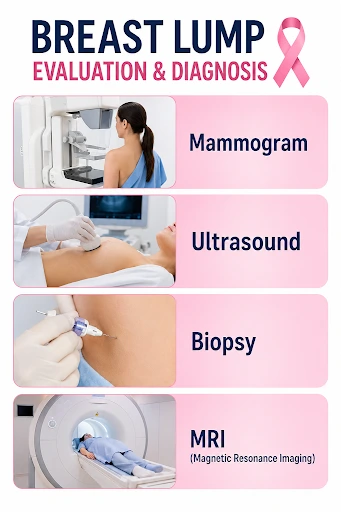
A breast lump evaluation typically involves a combination of clinical examination and diagnostic tests.
Common Diagnostic Tests
| Diagnostic Test | Purpose | When It May Be Recommended |
| Mammogram | Uses low-dose X-rays to detect abnormalities, including small tumours and suspicious calcifications that may not be felt during a physical examination. | Commonly used for breast cancer screening and evaluation of suspicious breast changes. |
| Ultrasound | Uses sound waves to create detailed images of breast tissue and helps distinguish between solid masses and fluid-filled cysts. | Often recommended when a breast lump is detected or when additional imaging is needed after a mammogram. |
| Biopsy | Involves removing a small sample of breast tissue for laboratory analysis to determine whether cancer cells are present. | Recommended when imaging tests identify a suspicious area that requires confirmation. |
| MRI (Magnetic Resonance Imaging) | Produces detailed images of the breast using magnetic fields and radio waves, helping identify abnormalities that may not be visible on other imaging tests. | May be used in selected cases, such as high-risk patients, dense breast tissue, or to assess the extent of diagnosed breast cancer. |
Dr Joydeep Ghosh, an experienced breast cancer doctor in Kolkata, adopts a structured diagnostic approach to ensure that breast abnormalities are accurately identified and appropriately managed.
Treatment Options If a Breast Lump Is Diagnosed as Breast Cancer
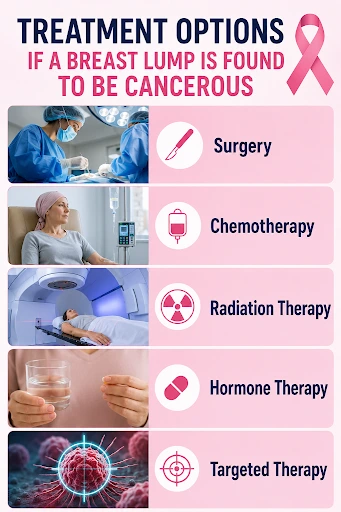
Treatment depends on several factors, including the type of breast cancer, stage of the disease, tumour size, hormone receptor status, HER2 status, and overall health of the patient. A personalised treatment plan is developed after a complete evaluation.
Surgery
Surgery is often the primary treatment for breast cancer. Depending on the extent of the disease, it may involve removing the tumour (lumpectomy) or the entire breast (mastectomy).
Chemotherapy
Chemotherapy uses anti-cancer drugs to destroy cancer cells throughout the body. The treatment plan depends on the characteristics and stage of breast cancer.
Radiation Therapy
Radiation therapy uses high-energy beams to destroy cancer cells that may remain after surgery and helps reduce the risk of recurrence.
Hormone Therapy
Hormone therapy is used for hormone receptor-positive breast cancers. It works by blocking or reducing the effects of hormones that can promote cancer growth.
Targeted Therapy
Targeted therapy focuses on specific proteins or genetic changes that help cancer cells grow. These treatments are commonly used for certain types of breast cancer, including HER2-positive breast cancer.
Key Takeaways
- Not all breast lumps are cancerous, but new or persistent lumps require medical evaluation.
- Breast cancer may also present with changes in breast size or shape, skin dimpling, nipple inversion, nipple discharge, or swollen lymph nodes.
- Diagnostic tests such as mammography, ultrasound, biopsy, and MRI help determine the cause of a breast lump.
- Treatment options depend on the type and stage of breast cancer and may include surgery, chemotherapy, radiation therapy, hormone therapy, or targeted therapy.
- Early diagnosis by a breast cancer doctor helps guide timely and appropriate treatment planning.
Concerned About a Breast Lump? Get Expert Evaluation from Dr Joydeep Ghosh
Dr Joydeep Ghosh, a trusted breast cancer doctor in Kolkata, offers comprehensive evaluation, accurate diagnosis, and personalised treatment planning for breast cancer and other breast conditions.
Call 098755 18968 to schedule an appointment today.
People Also Ask
Can a Breast Lump Change During the Menstrual Cycle?
Yes. Hormonal fluctuations during the menstrual cycle can cause breast tissue to become swollen, tender, or lumpier than usual. These changes often improve after the menstrual period ends. However, a breast lump that persists, enlarges, or feels different from the surrounding tissue should be evaluated by a healthcare professional.
Are All Breast Cancers Associated With a Painful Lump?
No. Many breast cancers do not cause pain, especially in the early stages. While some people may experience tenderness or discomfort, both painful and painless breast lumps can be associated with breast conditions. Any new or persistent lump should be assessed by a doctor regardless of whether it causes pain.
Can Dense Breast Tissue Make Breast Cancer Harder to Detect?
Yes. Dense breast tissue can make abnormalities more difficult to identify on a mammogram because both dense tissue and tumours appear white on imaging. In certain situations, additional tests such as ultrasound or MRI may be recommended to provide a more detailed evaluation.
Does the Location of a Breast Lump Affect the Risk of Breast Cancer?
Breast cancer can develop in any area of the breast. Although some regions contain more breast tissue and may therefore be more common sites for lumps, the location alone cannot determine whether a lump is cancerous. A thorough clinical examination and appropriate imaging tests are needed for accurate assessment.
Can Lifestyle Factors Increase the Risk of Breast Cancer?
Certain lifestyle factors may increase the risk of breast cancer, including obesity, physical inactivity, excessive alcohol consumption, and long-term exposure to certain hormones. While not all risk factors can be controlled, maintaining a healthy weight, staying physically active, and following a balanced lifestyle may help reduce overall risk.
Can Breast Cancer Return After Successful Treatment?
Yes. Although many people remain cancer-free after treatment, breast cancer can sometimes recur months or years later. Regular follow-up appointments, recommended screenings, and ongoing monitoring help detect any recurrence or new breast changes as early as possible.