



Most people hear “cancer doctor” and think it’s only about chemo or surgery. But cancer care today is wider, kinder, and smarter than that.
An experienced oncologist in Kolkata doesn’t just treat the disease — they also make sure the patient is comfortable, supported, and heard. That extra layer is palliative care, and it can start early.
Palliative care is not about “nothing more can be done.” It’s about “let’s make every day better while we treat you.” Let’s see how different oncologists are involved in this.
Understanding the Role of Oncologists
What “Oncologist” Really Means
An oncologist is a medical doctor who specialises in treating cancer. But the job is not only to remove or shrink the tumour. In modern practice, palliative care in oncology is also part of the job. That means helping with pain, breathlessness, mood, eating, and family worries.
Why Cancer Care Requires a Team
Cancer affects the whole person. So one doctor alone is rarely enough. You need a team that can treat, support, and guide. That’s why palliative care works best when oncologists, nurses, counsellors, and nutrition experts work together.
The Main Types of Oncologists
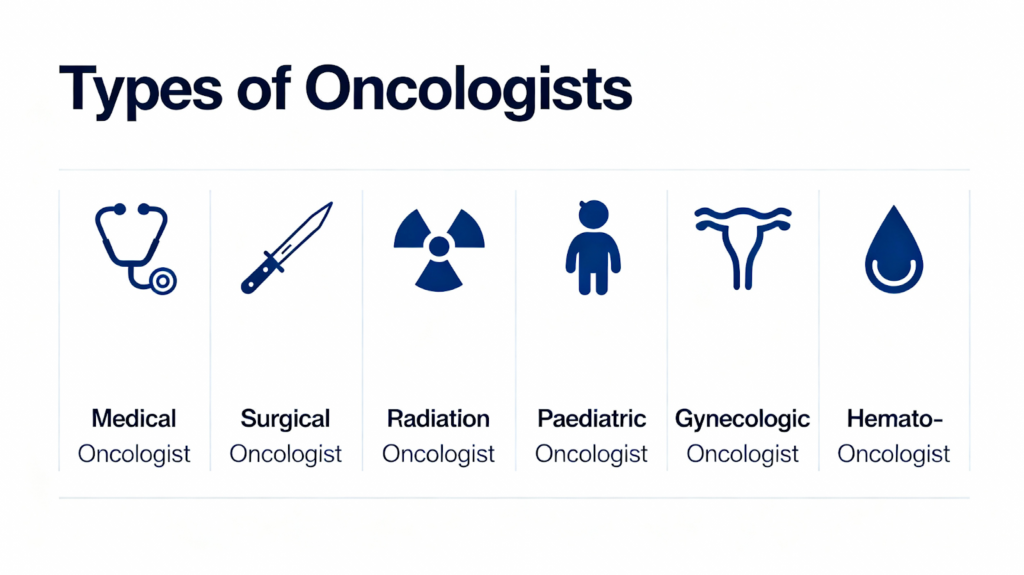
Below are the typical oncology specialists your patient may encounter. Each of them can bring palliative thinking into care.
| Oncologist Type | Role Description |
| Medical Oncologist | The Treatment Planner |
| Surgical Oncologist | The Cancer Surgeon |
| Radiation Oncologist | The Radiation Expert |
| Paediatric Oncologist | For Childhood Cancers |
| Gynecologic Oncologist | For Women’s Cancers |
| Hemato-Oncologist | For Blood Cancers |
Let’s dive in to learn more about the types of oncologists.
Medical Oncologist — The Treatment Planner
This doctor plans chemotherapy, targeted therapy, or immunotherapy. They also notice side effects. They can start supportive care during treatment if you feel very weak, nauseous, or anxious.
Surgical Oncologist — The Cancer Surgeon
This doctor removes the tumour. But even surgeons can call the palliative team when pain is high after surgery or when the cancer is advanced and surgery alone won’t solve symptoms.
Radiation Oncologist — The Radiation Expert
Sometimes radiation is used not only to cure but also to reduce pain, bleeding, or pressure. That is palliative radiation. It is part of an Oncologist’s role in palliative care.
Paediatric Oncologist — For Childhood Cancers
Children need comfort even more. Palliative care for them focuses on pain control, play, nutrition, and parent counselling.
Gynecologic Oncologist — For Women’s Cancers
Pelvic pain, swelling, or discharge can affect daily life. Palliative care inputs help maintain dignity and routine.
Hemato-Oncologist — For B_lood Cancers
These patients may get frequent infections, weakness, or mouth ulcers. Palliative care helps them complete treatment while staying stable.
Who Should You See (and When)?
| Oncologist to See | Scenario |
| Medical Oncologist | First Point of Contact |
| Surgical Oncologist | When Surgery Is Needed |
| Radiation Oncologist | When Radiation Is Part of Treatment |
First Point of Contact — Medical Oncologist
Most patients start here. This is the doctor who can say, “We will treat the cancer and also keep you comfortable.” This is where patient-centred cancer care begins.
When Surgery Is Needed — Surgical Oncologist
If the tumour is operable, you see the surgeon. But even here, palliative support can come in — for pain, for breathing, for nutrition before surgery.
When Radiation Is Part of Treatment — Radiation Oncologist
If radiation is planned, the doctor can use it for cure or for comfort (for example, to reduce bone pain). This is how cancer pain management becomes part of daily practice.
Specialised Cancers — Choosing the Right Subspecialist
Some cancers need very specific doctors. However, whichever specialist you meet, they can still refer you to palliative care, allowing you to eat, sleep, and move more comfortably.
How Oncologists Work Together
The Multidisciplinary Cancer Care Team
Modern cancer hospitals typically employ a team-based approach to care. Oncologists, palliative doctors, nurses, dieticians, and counsellors talk to each other.
This is where holistic cancer care actually takes place — combining medical, emotional, and social support.
Coordinating Your Treatment Journey
Your main doctor remains your anchor. A reliable oncologist in Kolkata will tell you, “We are treating the cancer, but tell me if you are hurting, worried, or not sleeping.” Then they call the right person — pain specialist, psychologist, physiotherapist — so you don’t have to find help alone.
Tips for Choosing the Right Oncologist
Expertise and Subspecialisation
Choose a doctor who treats your type of cancer often. They will know when to bring palliative care early and when to focus on the cure first.
Communication and Trust
You should be able to say, “I am scared,” or “I can’t eat,” without feeling rushed. That’s the key to emotional support for cancer patients. If a doctor listens, they can treat better.
Access to Advanced Treatments and Trials
Doctors who stay updated often also offer integrative oncology services — safe add-ons, such as relaxation, nutrition, and fatigue management. This makes life during treatment easier.
Where Palliative Fits in All This
So, where does palliative care sit inside this structure? Right in the middle.
- It sits beside chemo, not after it.
- It sits beside surgery, not after it.
- It sits beside radiation, not after it.
Palliative care supports the quality of life in cancer care. It makes sure you don’t lose yourself while treating the disease.
It can help with:
- Pain and swelling
- Breathlessness
- Mouth ulcers
- Constipation or diarrhoea
- Anxiety and confusion
- Family stress
Dr. Joydeep Ghosh, a noteworthy oncologist in Kolkata, will never tell you, “Palliative is for the end.” They will say, “Palliative is for comfort.”
Two Quick Reference Tables
Table 1: What Palliative Care Targets
| Problem | Palliative Focus |
| Pain | Medicines, radiation for pain, nerve blocks |
| Poor appetite | Diet changes, appetite support |
| Low mood | Counselling, family sessions |
| Sleep issues | Relaxation, mild medicines |
| Family stress | Education and guidance |
Table 2: Palliative vs Hospice Care
| Point | Palliative Care | Hospice Care |
| When | Any time in cancer | Usually, the last stage |
| Along with Treatment | Yes | Usually no |
| Goal | Comfort & function | Comfort + dignity |
| Who Gets It | Any cancer patient | Patients near the end of life |
This is the clear way to explain the difference between palliative and hospice care to families.
Why This Approach Works
- It reduces hospital emergencies.
- It keeps treatment going.
- It makes families calmer.
- It gives patients control.
Most importantly, it makes cancer care seem more personal and human. This is what we mean by supportive care during treatment — ‘Care that walks with you.’
Start Comfort Along With Treatment
If you or a loved one is going through cancer and you feel, “The treatment is fine, but daily life is hard,” then this is the right time to add palliative care.
Visit Dr Joydeep Ghosh, a reliable oncologist in Kolkata and receive a personalised plan that treats your cancer while protecting your comfort. Get guidance for pain, food, sleep, and family issues in one place.
Let an experienced specialist make your journey kinder, not harder. The sooner you start, the sooner life becomes easier.
Book a consultation at your earliest convenience!
People Also Ask
Is palliative care only for terminal patients?
No. It can start at diagnosis and continue during treatment.
Will palliative care stop my main treatment?
No. It runs alongside treatment to make it easier.
Can I get palliative care at home?
Yes. Many parts can be done at home with the doctor’s guidance.
Does palliative care also benefit families?
Yes. It teaches families how to support the patient.
Who should I talk to first?
Talk to your treating oncologist — they will connect you to the palliative team.