


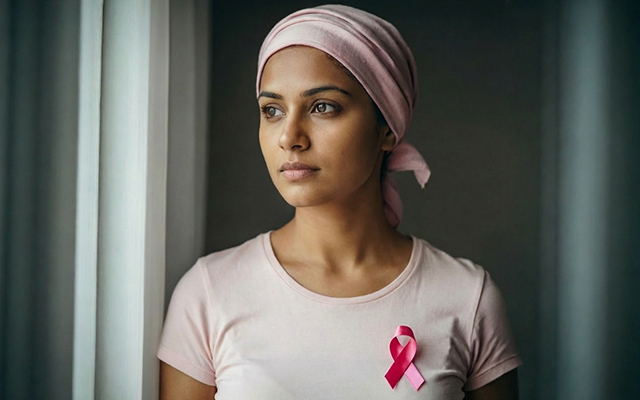
Cancer was once a distant fear. Something older people worry about. Something you thought you’d face later, after life slowed down.
That timeline has collapsed. And cancer is no longer confined to older age groups in the city.
What Cancer Doctors Are Seeing Regularly Across The City
Across oncology clinics in the city, doctors are seeing a clear and deeply unsettling shift—young adults in their 20s and 30s walking in with cancers that were once considered midlife diseases. This is no longer anecdotal. It’s a recurring pattern, one that is seen often enough to demand attention, urgency, and honesty.
Medical observations now align with population data showing cancer in young adults (especially in metropolitan cities like Kolkata) is no longer rare.
It is rising—quietly, steadily, and dangerously unnoticed. And when diagnosis is delayed, outcomes change.
Early evaluation under the guidance of an experienced cancer doctor in Kolkata remains one of the strongest predictors of survival and recovery.
The Truth Behind the Rising Trend No One Wants to Acknowledge
The rise is not random. It is layered.
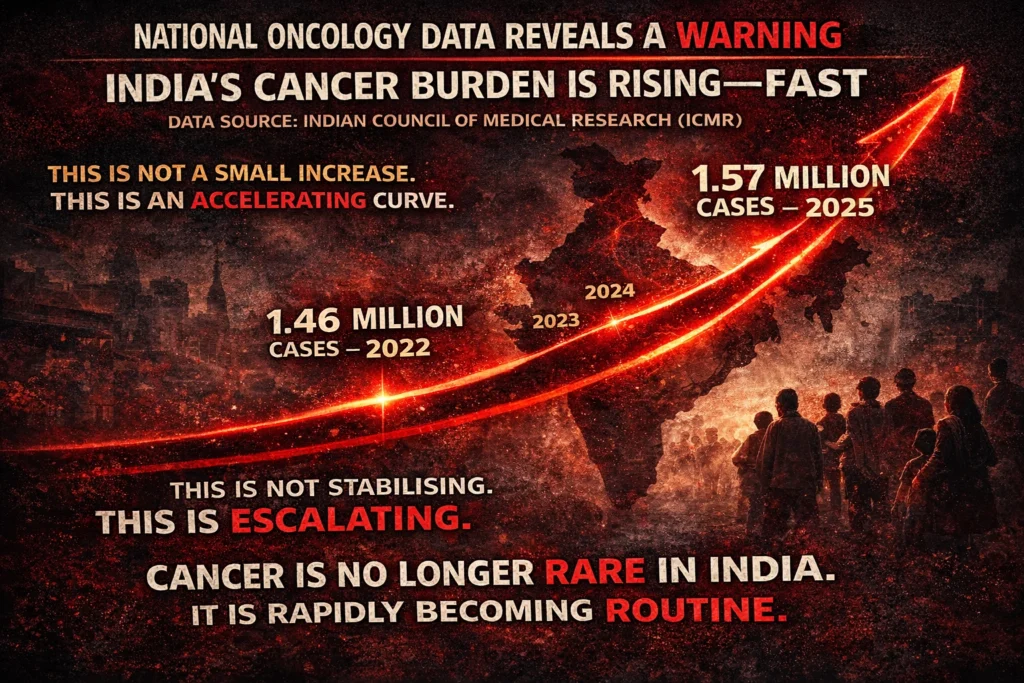
India, as a whole, has seen a measurable increase in early-onset cancers, with national oncology data aligning with the (ICMR) Rising cancer cases in India 2025 projections.
[Source]
But Kolkata carries unique risk multipliers
Cancer is rising among young adults across the city of joy, due to a convergence of environmental exposure, modern lifestyle stressors, delayed diagnosis, and low suspicion of cancer at younger ages.
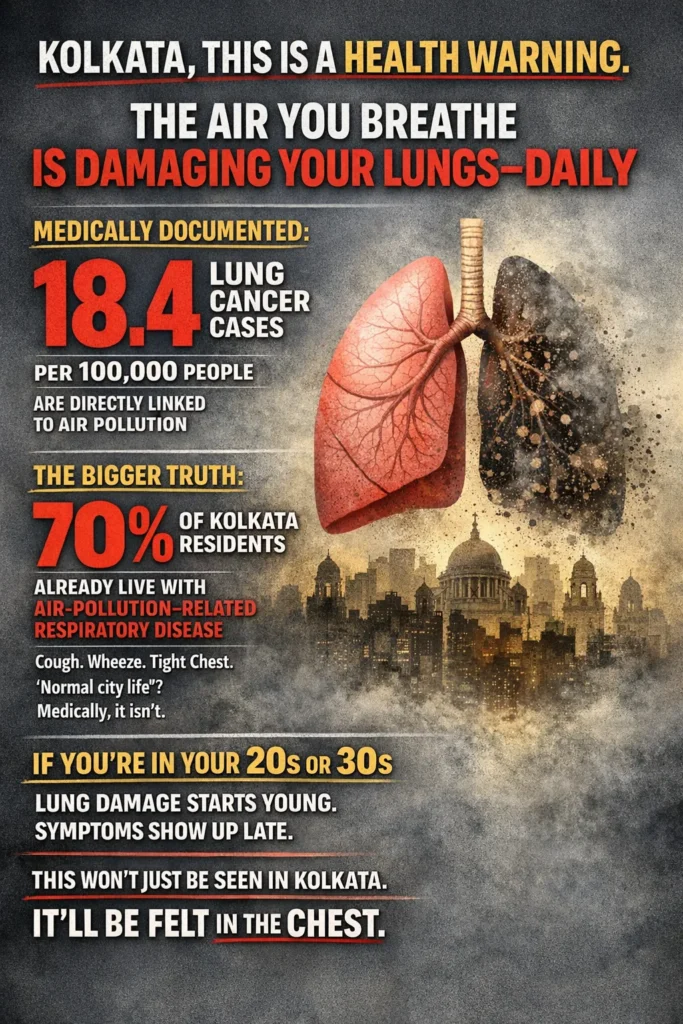
For Kolkata specifically, where air pollution has been linked to 18.4 cases of lung cancer per 100,000 people and where 70% of residents suffer from respiratory diseases caused by toxic air, the story is even more urgent. (Source)
What makes this especially dangerous is not just the incidence. It’s ‘delay’.
Young adults are still widely perceived as “low risk.” Symptoms are dismissed. Suspicion is low. Time slips away.
Simply put; This is not about fear. It’s about recognising why young people are getting cancer—and why ignoring the pattern costs lives.
Dr Joydeep Ghosh, a leading medical oncologist/cancer doctor in Kolkata, is here to ease the path to cancer recovery, bringing compassionate care and specialised expertise.
If You’re Young and Living in Kolkata, This Is Already Your Problem
Cancer used to be something you worried about later. After retirement. After life slowed down. That assumption is no longer safe.
Long commutes. Polluted air. Erratic meals. Chronic stress normalised as ambition. Sleep debt accumulated over the years.
These exposures interact. Over time, they create sustained inflammation, oxidative stress, and cellular damage—core drivers behind lifestyle cancer risks in Kolkata. Add delayed medical attention, and the risk compounds.
The most dangerous part?
Most of these young patients did not feel seriously ill when the disease began. This isn’t about panic. It’s about realism.
The First Myth That Needs to Die: “I’m Too Young for Cancer”
Cancer in young adults behaves differently. It doesn’t announce itself with dramatic symptoms.
It blends into everyday life
- Fatigue feels like burnout
- Weight loss feels like “getting fit”
- A cough feels like pollution
- Bloating feels dietary
- A lump feels impossible at your age
This is why early symptoms of cancer in young adults are so often ignored—by patients and sometimes even by the system.
By the time certainty arrives, time has already been lost.
One Snapshot That Explains a Bigger Pattern
Doctors don’t see random cases. They see clusters.
Cancers are increasingly seen in young adults, and why diagnosis is delayed
| Cancer type | Why are the early signs missed |
| Head & neck cancers | Mouth ulcers and throat pain were dismissed as an infection |
| Gynaecological cancers | Bloating, cycle changes attributed to hormones |
| Gastrointestinal cancers | Acidity, bowel changes blamed on food or stress |
| Blood cancers | Fatigue, infections linked to burnout |
| Lung cancers | Persistent cough blamed on pollution |
| Urologic cancers | Urinary changes ignored |
| Sarcomas | Deep aches are assumed to be muscle injury |
| Breast cancer in young women | Lumps delayed due to age-based disbelief |
This table exists to show how easily cancer hides in plain sight—not to alarm, but to awaken.
Why Kolkata Quietly Raises the Stakes
Environmental exposure is not theoretical here.
Air quality studies consistently associate long-term exposure to particulate matter with increased cancer risk, making environmental cancer risks in Kolkata a daily, lived reality. When this exposure intersects with genetic vulnerability, risk accelerates. [Source]
Similarly, it is also where genetic cancer causes across India come into play—not as destiny, but as susceptibility that requires vigilance.
The environment loads the gun. Delay pulls the trigger.
“But I Eat Well and Exercise.” Why That’s Not a Safety Net Anymore
Many young cancer patients say the same thing.
“I did everything right.”
They are not wrong—and they are not protected either.
Modern oncology recognises the healthy-lifestyle paradox. Even with good habits, risk persists due to:
- Environmental exposure
- Early genetic activation
- Microbiome disruption
- Hormonal shifts
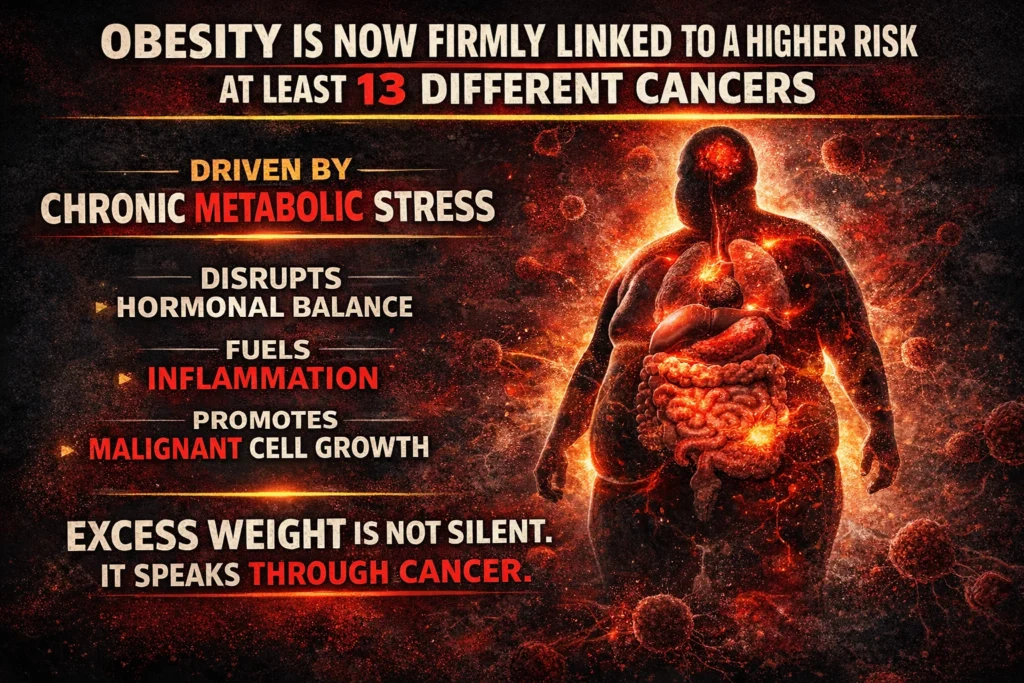
In fact, a relevant [source] on obesity and cancer risk across India links metabolic stress to malignancy.
Health today is not just about habits. It’s about timing.
The Real Danger Is Not Cancer. It’s Time Slipping Away Unnoticed
Cancer outcomes are often determined months before diagnosis, not after.
What delay quietly changes
- Early disease becomes advanced
- Treatment intensity increases
- Recovery becomes longer
- Options narrow
This is why modern oncology cancer screening for young adults across India increasingly emphasises risk-based evaluation rather than age alone.
If something feels persistent, unusual, or progressive, waiting does not make it safer.
When Symptoms Should No Longer Be Ignored
You don’t need certainty to seek care. You need consistency.
Red flags that deserve medical attention
- Fatigue that does not improve with rest
- Unexplained weight loss or appetite changes
- Persistent lumps or swellings
- Non-healing ulcers or sores
- Chronic cough or hoarseness
- Changes in bowel or bladder habits
- Recurrent infections or night sweats
These symptoms are common. Ignoring them for months is not.
What Actually Happens When You See a Cancer Doctor Early
Fear keeps people away. Reality reassures them.
A typical early oncology evaluation
| Step | Purpose |
| Clinical assessment | Identifies symptom patterns and risk |
| Blood investigations | Detects anaemia, inflammation, and organ stress |
| Imaging (if required) | Locates abnormalities |
| Biopsy (only when needed) | Confirms diagnosis accurately |
Early consultation often brings reassurance. When it doesn’t, it gives you time—and that changes everything.
This is where Dr Joydeep Ghosh, a trained cancer doctor in Kolkata, plays a defining role.
Why Early Detection Changes the Entire Story
Early-stage treatment outcome is consistently better across almost all cancer types.
| Stage at diagnosis | What usually follows |
| Early stage | High chance of cure, simpler treatment |
| Locally advanced | Combination therapy, longer recovery |
| Advanced stage | Disease control becomes the goal |
The difference between these stages is often delay, not destiny.
Modern Cancer Treatment Is More Precise Than Ever
Cancer care today is driven by biology, not guesswork.
With advances in systemic oncology, treatment is now:
- Targeted rather than blanket
- Better tolerated
- Personalised to tumour biology
Early arrival unlocks smarter options, guided by evidence rather than urgency. A trained medical oncologist understands when to escalate—and when not to.
This is why Dr Joydeep Ghosh, one of the best cancer specialists in Kolkata, reiterates that early cancer matters more than people realise.
A Quick Recap
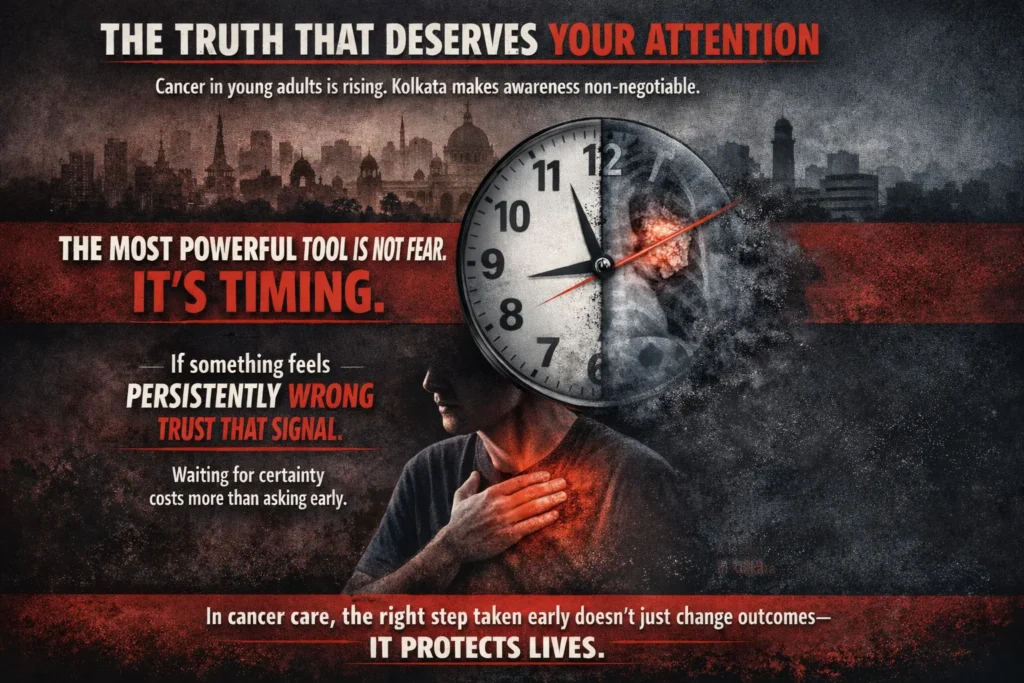
Time to Act (Read This Twice)
If symptoms persist, change, or return, waiting longer does not make the answer clearer.
Seeing a cancer doctor near you early does not mean something is wrong. It means you refuse to lose time.
Many people walk away reassured. Others walk away treated—before the disease hardens its grip.
Ultimately, both outcomes protect futures.
Consult Dr Joydeep Ghosh, a leading cancer doctor in Kolkata, early.
People Also Ask:
Why are so many young people suddenly having cancer?
Early exposure to processed food, obesity, inactivity, stress, pollution, tobacco, alcohol, and poor sleep is accelerating cancer risk in young people.
Why is cancer catching young Indians?
Urban pollution, packaged diets, high stress, hormonal imbalance, genetic risk, and delayed screening are driving cancer into younger Indians.
Why is cancer increasing rapidly in India?
Rising tobacco use, obesity, inactivity, environmental toxins, population growth, and late diagnosis are rapidly increasing cancer cases in India.
What is causing the sudden rise in cancer?
Cumulative lifestyle risks, environmental exposure, metabolic disorders, and weak preventive healthcare are causing cancer to appear earlier and more often.