


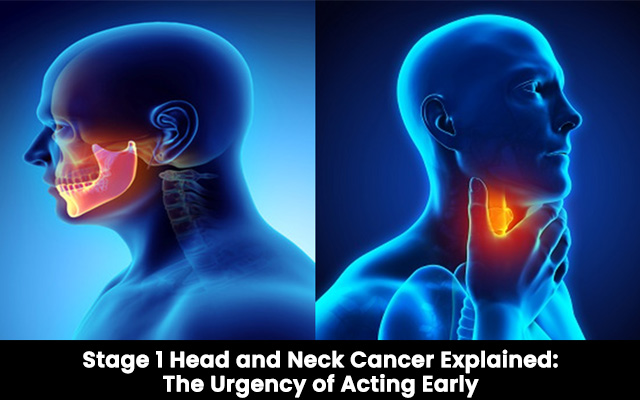
A diagnosis of head and neck cancer often brings fear and uncertainty. However, when doctors catch the disease at Stage 1, the outlook changes dramatically. Early-stage head and neck cancer usually responds well to treatment, and patients often go on to live full, healthy lives afterward. That said, timing matters enormously, since the window between "early" and "advanced" can close quickly. This is why understanding the symptoms, causes, and urgency of Stage 1 head and neck cancer is so important.
What Is Head and Neck Cancer?
Areas It Affects
Head and neck cancer is not a single disease. Instead, it is an umbrella term that covers cancers arising in the mouth, throat, larynx (voice box), sinuses, and salivary glands. Because these areas sit close together and share overlapping symptoms, doctors often group them under this broader category. Still, each sub-site behaves differently, so a proper diagnosis always requires identifying the exact origin of the tumour.
How It Develops and Spreads
Most head and neck cancers begin in the squamous cells that line these areas. Initially, abnormal cells grow locally and cause few noticeable symptoms. As the disease progresses, however, the tumour can spread to nearby lymph nodes in the neck and, eventually, to other parts of the body. This is precisely why Stage 1 diagnosis matters so much: at this point, the cancer typically remains confined to its original site.
What Does “Stage 1” Actually Mean?
How Head and Neck Cancers Are Staged
Doctors generally use the TNM system to stage head and neck cancer, and it looks at three factors: the size of the Tumour, whether it has spread to lymph Nodes, and whether Metastasis has occurred elsewhere in the body. In simple terms, Stage 1 usually means the tumour is small (generally under 2 centimetres), and it has not spread to lymph nodes or distant organs.
What Makes Stage 1 Different From Later Stages
Unlike Stage 3 or Stage 4 cancers, which often involve larger tumours, lymph node involvement, or spread to other organs, Stage 1 cancer is localized. Consequently, treatment tends to be simpler, recovery tends to be faster, and survival outcomes tend to be significantly better.
What Are the Early Warning Signs of Head and Neck Cancer?
Recognising symptoms early plays a critical role in catching the disease at Stage 1. Common warning signs include:
Persistent Sore Throat or Hoarseness
A sore throat or hoarse voice that lasts more than two to three weeks, especially without an infection, deserves medical attention.
Lumps or Swelling in the Neck
An unexplained lump in the neck, even if painless, should never be ignored, since it can indicate lymph node involvement.
Mouth Sores That Don’t Heal
Most mouth ulcers heal within a week or two. If a sore persists beyond that, it warrants an evaluation by a doctor.
Difficulty Swallowing or Unexplained Ear Pain
Trouble swallowing, a sensation of something stuck in the throat, or ear pain without an obvious cause can all point toward an underlying issue in the head and neck region.
Why Is Acting Early So Important?
How Survival Rates Differ Between Stage 1 and Later Stages
Survival rates drop considerably as the disease advances. While Stage 1 head and neck cancers often carry favourable long-term outcomes, later stages come with a much tougher prognosis, largely because the cancer has had time to spread. Therefore, the sooner a patient seeks evaluation, the better the chances of a full recovery.
How Early Treatment Reduces the Need for Aggressive Intervention
Additionally, Stage 1 treatment is generally far less invasive. Surgery or radiation alone can often achieve a cure, whereas advanced-stage cancer frequently requires a combination of surgery, radiation, and chemotherapy — along with a longer recovery period and greater impact on quality of life.
What Causes Head and Neck Cancer? Who Is at Risk?
Tobacco and Alcohol Use
Tobacco use, whether smoked or chewed, remains the single biggest risk factor. Alcohol consumption compounds this risk further, particularly when combined with tobacco.
HPV Infection
Interestingly, human papillomavirus (HPV) has emerged as a major cause of oropharyngeal cancer in recent years, particularly among younger patients who neither smoke nor drink.
Age, Gender, and Occupational Exposure
Men face a higher risk than women, and risk increases with age, particularly after 50. Occupational exposure to certain chemicals, wood dust, or asbestos can also raise the likelihood of developing these cancers.
How Is Stage 1 Head and Neck Cancer Diagnosed?
Physical Examination and Endoscopy
Diagnosis typically begins with a physical examination, followed by an endoscopy, which allows the doctor to directly visualise the throat, larynx, or nasal passages.
Biopsy and Imaging
A biopsy confirms the presence of cancer cells, while imaging tests such as CT, MRI, or PET scans help determine the exact size and location of the tumour. Together, these tools allow doctors to confirm the stage accurately before recommending treatment.
How Is Stage 1 Head and Neck Cancer Treated?
Surgery as a Primary Option
For many Stage 1 cases, surgical removal of the tumour offers a complete and effective cure, particularly when the tumour is easily accessible.
Radiation Therapy for Early-Stage Cases
Alternatively, radiation therapy alone can effectively treat many Stage 1 head and neck cancers, especially when surgery risks affecting speech, swallowing, or appearance.
Why Treatment Is Simpler at This Stage
Because the tumour has not spread beyond its original site, doctors can often use a single treatment modality rather than a combination approach, resulting in fewer side effects and a quicker return to normal life.
What Happens If Treatment Is Delayed?
How the Cancer Can Progress to Later Stages
Unfortunately, delays in diagnosis or treatment allow the cancer to grow and, eventually, spread to lymph nodes or distant organs. Once this happens, the cancer moves into a later stage, and treatment becomes considerably more complex.
Impact on Treatment Complexity and Quality of Life
Consequently, patients diagnosed at later stages often require combination therapy, longer recovery times, and greater lifestyle adjustments. This is precisely why doctors urge patients to seek help the moment symptoms appear.
How Can You Reduce Your Risk?
Lifestyle Changes and Regular Screening
Avoiding tobacco and limiting alcohol consumption remain the most effective preventive steps. Additionally, the HPV vaccine can meaningfully reduce the risk of HPV-related oropharyngeal cancer when administered at the recommended age.
Importance of Routine Dental and ENT Check-Ups
Since dentists and ENT specialists often spot early warning signs during routine check-ups, regular visits play a valuable role in catching abnormalities before they progress.
Frequently Asked Questions
What is Stage 1 head and neck cancer?
Stage 1 refers to a small, localized tumour that has not spread to lymph nodes or other parts of the body, making it the most treatable stage of the disease.
What are the earliest symptoms of head and neck cancer?
Persistent sore throat, hoarseness, a neck lump, mouth sores that won't heal, and difficulty swallowing are among the earliest warning signs.
Is Stage 1 head and neck cancer curable?
Yes, Stage 1 head and neck cancer is often curable, particularly with prompt surgery or radiation therapy.
What is the survival rate for Stage 1 head and neck cancer?
Survival rates are generally favourable, though exact figures vary by sub-site and individual patient factors.
How long can head and neck cancer go undetected?
It can go undetected for months, since early symptoms often resemble a cold or minor throat irritation.
Does a sore throat mean I have throat cancer?
Not necessarily. Most sore throats result from infections or irritation. However, one lasting more than two to three weeks should be evaluated by a doctor.
Can head and neck cancer be treated without surgery?
Yes, radiation therapy alone can effectively treat many early-stage head and neck cancers.
What is the main cause of head and neck cancer?
Tobacco and alcohol use remain the leading causes, though HPV infection has become an increasingly significant factor.
How is head and neck cancer different from oral cancer?
Oral cancer refers specifically to cancers of the mouth, while head and neck cancer is a broader category that also includes the throat, larynx, sinuses, and salivary glands.
How often should I get screened for head and neck cancer?
No universal screening schedule exists, but routine dental and ENT check-ups, combined with prompt attention to persistent symptoms, offer the best chance of early detection.
Conclusion — Don’t Wait to Get Checked
Stage 1 head and neck cancer offers the best possible chance for a full recovery, but this advantage depends entirely on early detection. Persistent symptoms like hoarseness, a neck lump, or a mouth sore that won't heal should never be brushed aside, since acting early can make the difference between a simple treatment plan and a far more complex journey.
If you're experiencing any of these warning signs, don't wait. Dr. Joydeep Ghosh, a leading medical oncologist in Kolkata, specialises in diagnosing and treating head and neck cancer, including oral cavity cancer, larynx cancer, and oropharynx cancer. Book a consultation today and take the first step toward early diagnosis and effective treatment.