



Blood cancer is one of the most common cancers in India, with over 120,000 new cases diagnosed annually.
1 person is diagnosed every 5 minutes, and India ranks 3rd globally in reported cases. The disease also causes an estimated 70,000 deaths each year.
Although more common in older adults, acute leukaemia and lymphoma also affect people under 40. That makes it important to recognise blood cancer symptoms in young adults before they are dismissed as stress, overwork, or temporary illnesses.
This article explains why these warning signs occur, how they differ from stress-related fatigue or common illnesses, and when medical evaluation becomes necessary.
Why Are Blood Cancer Cases Rising Among Young Indians?
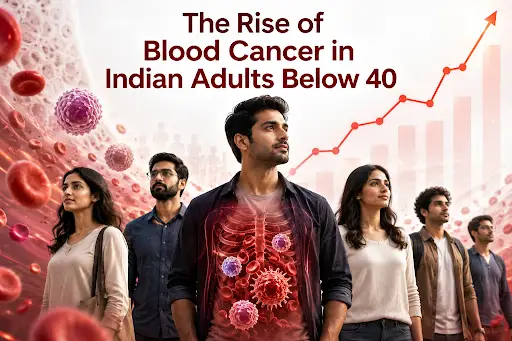
Blood cancer cases are increasing among young Indians due to a combination of environmental exposures, lifestyle changes, genetic susceptibility, and improved early detection through greater health awareness and routine blood testing.
- Environmental pollution: Fine particulate air pollution may contribute to cellular damage associated with cancer development.
- Chemical exposure: Long-term contact with industrial chemicals, pesticides, and occupational carcinogens can increase DNA damage.
- Radiation exposure: Ionising radiation is a recognised risk factor for certain blood cancers.
- Lifestyle factors: Processed diets, obesity, physical inactivity, tobacco, alcohol, chronic stress, and poor sleep may increase cancer risk.
- Genetic predisposition: Inherited mutations and epigenetic changes can increase susceptibility.
- Better diagnostics: Improved awareness and routine blood tests detect more early-stage cases than before.
Why Do Blood Cancer Symptoms Get Mistaken for Stress?
Early blood cancer symptoms are often mistaken for stress because persistent fatigue, poor appetite, sleep disturbances, unexplained weight loss, and recurrent infections overlap with common stress-related complaints.
Understanding leukaemia vs stress symptoms can help identify warning signs that require prompt medical evaluation.
What Are the Early Warning Signs of Blood Cancer?
Early leukaemia symptoms in adults and other blood cancer warning signs are often subtle and develop gradually. While many symptoms can occur in common illnesses, persistent, unexplained, or worsening changes, especially when several occur together, should be assessed by a doctor.
Is Constant Fatigue a Red Flag?
Fatigue and blood cancer are commonly linked because abnormal blood cell production can reduce oxygen delivery and weaken the immune system.
- Fatigue persists despite adequate sleep or rest.
- Daily activities become increasingly difficult.
- Weakness may be accompanied by shortness of breath or dizziness due to anaemia.
- Symptoms typically persist or worsen rather than improve over time.
Why Do You Keep Getting Fevers or Infections?
Persistent or recurrent leukaemia symptoms in adults may include frequent infections because abnormal white blood cells cannot effectively fight germs.
- Recurrent fever without an obvious source.
- Frequent bacterial, viral, or fungal infections.
- Infections that take longer than usual to resolve.
- Repeated antibiotic treatment without lasting improvement warrants medical evaluation.
Are Bruises or Bleeding Gums Something to Worry About?
Reduced platelet production can increase the risk of abnormal bleeding.
- Bruises develop after minor or no apparent injury.
- Bleeding gums occur during routine brushing or spontaneously.
- Frequent nosebleeds or prolonged bleeding from small cuts.
- Tiny red or purple skin spots (petechiae) may also appear.
Could Bone or Joint Pain Mean More Than Overwork?
Blood cancers can affect the bone marrow, leading to musculoskeletal discomfort.
- Persistent aching in bones or joints.
- Pain is unrelated to exercise or injury.
- Symptoms may occur in the back, hips, legs, or long bones.
- Pain that continues despite rest should be medically assessed.
What Does Unexplained Weight Loss Indicate?
Unintentional weight loss may reflect increased metabolic activity caused by cancer or reduced appetite.
- Noticeable weight loss without dieting or increased physical activity.
- Reduced appetite lasting several weeks.
- Ongoing weakness accompanying weight loss.
- Persistent symptoms require clinical evaluation to identify the underlying cause.
Should Night Sweats Be Ignored?
Night sweats can occur with infections, hormonal conditions, and certain blood cancers.
- Sweating is severe enough to soak clothing or bedding.
- Episodes recur over several weeks.
- Night sweats occur alongside fever, fatigue, or weight loss.
- Persistent symptoms should not be attributed solely to warm weather or stress.
Are Swollen Lymph Nodes a Warning Sign?
Enlarged lymph nodes can occur in several infections but may also indicate blood cancers affecting the lymphatic system.
- Swelling commonly occurs in the neck, armpits, or groin.
- Lymph nodes remain enlarged for several weeks.
- Swelling is usually painless and progressively enlarges.
- Persistent enlargement, especially with other warning signs, should be evaluated by a healthcare professional.
How Are Blood Cancer Symptoms Different From Everyday Stress?
Although leukaemia vs stress symptoms may appear similar initially, blood cancer indications usually persist, worsen over time, and occur alongside abnormal physical findings.
Recognising these differences can help determine when medical evaluation is needed, rather than assuming stress is the only cause.
| Stress | Blood Cancer |
| Fatigue often improves with rest or stress reduction. | Fatigue persists despite adequate sleep and rest. |
| Sleep disturbance varies with workload or emotional stress. | Symptoms continue regardless of lifestyle changes. |
| Fever is uncommon without an infection. | Recurrent or unexplained fever may occur. |
| Bruising or bleeding is not expected. | Easy bruising, bleeding gums, or petechiae may develop. |
| Weight usually remains stable. | Unexplained weight loss can occur. |
| Lymph nodes are generally not persistently enlarged. | Persistent swollen lymph nodes require evaluation. |
Who Is at Higher Risk in India?
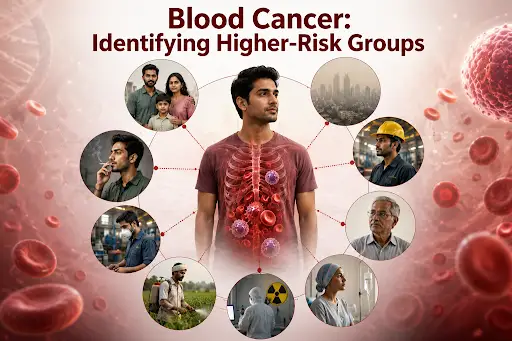
In India, blood cancer is no longer confined to older adults.
Understanding its causes and recognising early leukaemia symptoms is increasingly important, as people under 40 account for around 20% of all cancer cases and diagnoses of acute myeloid leukaemia (AML) continue to rise in adults aged 30 to 40.
- Urban adults (30-40 years): Greater exposure to air pollution, industrial chemicals, smoking, and alcohol increases risk.
- Young men: Higher tobacco use and occupational exposure to harmful chemicals contribute to greater susceptibility.
- People with a family history: Inherited blood disorders or genetic syndromes can increase lifetime risk.
- Cancer survivors: Previous chemotherapy or radiation therapy may increase the risk of developing secondary blood cancers.
- People with prolonged exposure to environmental toxins: Regular contact with pesticides, industrial chemicals, or ionising radiation may increase the risk.
When Should You See a Doctor?
Persistent symptoms should be medically evaluated rather than repeatedly dismissed as stress or minor infections.
Knowing how to detect early blood cancer involves recognising symptoms that shouldn't be ignored, as they may be early signs of leukaemia.
Consult a doctor if you experience
- Unexplained fatigue that persists for more than 2-4 weeks, or does not improve with adequate rest.
- Frequent or recurrent infections, or a fever of 38°C (100.4°F) or higher that lasts more than 48 hours or keeps returning without an obvious cause (source)
- Easy bruising, unexplained bleeding (such as frequent nosebleeds, bleeding gums, or prolonged bleeding from minor cuts), or severe weakness.
- Swollen lymph nodes in the neck, armpits, or groin that persist for more than 2-4 weeks, continue to enlarge, or occur without a recent infection.
- Symptoms that worsen, recur frequently, or do not improve despite appropriate treatment.
How Is Blood Cancer Diagnosed?
Knowing how to detect blood cancer early is important because symptoms alone cannot confirm the disease.
To detect it early, doctors use a combination of physical examination, blood tests, biopsies, and imaging to make an accurate diagnosis.
- Physical Examination and Medical History
Doctors begin by reviewing your symptoms, medical history, risk factors, and performing a physical examination to check for enlarged lymph nodes, liver, or spleen.
- Complete Blood Count (CBC) and Blood Smear
A Complete Blood Count (CBC) measures red blood cells, white blood cells, and platelets to detect abnormalities. A peripheral blood smear examines the size, shape, and appearance of blood cells under a microscope.
- Bone Marrow and Lymph Node Biopsy
A bone marrow biopsy assesses blood cell production and helps confirm many blood cancers. A lymph node biopsy may be performed to examine abnormal lymphatic tissue when lymphoma is suspected.
- Imaging and Genetic Testing
CT, PET, or MRI scans help identify enlarged lymph nodes, organ involvement, or tumours. Genetic and molecular tests detect specific chromosomal or gene abnormalities that classify the cancer and guide treatment decisions.
Can Early Detection Improve Outcomes?
Yes. For adults under 40, early detection can increase blood cancer survival rates to 60-90% with timely treatment and advanced therapies.
Survival drops significantly when the disease is diagnosed at a later stage.
| Survival & Improvement Rates | Why Early Detection Matters |
| Acute Lymphoblastic Leukaemia (ALL): For Indian adolescents and adults under 40, overall survival is 50-60%, while event-free survival ranges from 41-70% with timely treatment. | Higher remission potential: Young adults' better bone marrow reserve and physiological resilience enable them to tolerate intensive, curative therapies more effectively than older patients. |
| Hodgkin & Non-Hodgkin Lymphoma: 80-90% improvement and cure rates when detected early. | Lower treatment costs: Reduced need for prolonged intensive care and targeted therapies. |
| Chronic Myeloid Leukaemia (CML): Patients responding to targeted oral therapy, such as imatinib, achieve 60-80% 5-year survival. | Earlier treatment: Better outcomes before disease progression. |
Don’t Dismiss What Your Body Is Telling You

If you experience persistent or unexplained symptoms, consult an experienced blood cancer doctor such as Dr Joydeep Ghosh for a comprehensive evaluation and evidence-based treatment.
Call today to book a consultation.
People Also Ask
Can blood cancer symptoms feel like stress or anxiety?
Yes. Fatigue, poor concentration, and appetite changes may resemble stress, but persistent symptoms with fever, bruising, or infections require medical evaluation.
At what age is blood cancer most common in India?
Blood cancer can occur at any age. Some types are more common in children, while others occur more frequently in adults and older individuals.
What blood test detects leukemia?
A Complete Blood Count (CBC) with a peripheral blood smear is usually the first investigation. Further tests confirm the diagnosis.
Is blood cancer curable if caught early?
Some blood cancers are highly treatable, and certain types can be cured. Outcomes depend on the specific diagnosis, genetics, treatment response, and overall health.
What causes blood cancer in young people?
Most cases have no identifiable cause. Genetic mutations acquired during life, environmental exposures, and previous cancer treatment may contribute in some individuals.
Can lifestyle changes reduce blood cancer risk?
No lifestyle change can completely prevent blood cancer. Avoiding tobacco, limiting unnecessary radiation exposure, and reducing benzene exposure support overall health.
How long do blood cancer symptoms take to appear?
Symptoms may develop gradually over weeks or months, while some aggressive blood cancers present rapidly over days to weeks.
Is blood cancer hereditary?
Most blood cancers are not inherited. A small proportion occurs in people with inherited genetic conditions or a strong family history of certain blood disorders.